



Marble statue of the head of King Apion of Selenica in ancient Greece
Ptolemy Apion was the last king of Cyrenaica in Greece from 150 BC to 145 BC. He is a member of the Ptolemaic dynasty. This statue was made during the Hellenistic period in the 1st century BC and is 36.83 centimeters tall. The statue was discovered in the Temple of Apollo on Mount Panathos in central Greece and is now located in the British Museum.

Moxijia Fire Snake Stone Carving
This sculpture showcases all the features of the fire snake Xiuhcoatl, blending reality and mythical creatures, including its snake head, short legs, claws, and curved nose. The end of the tail of the fire snake is composed of the traditional Mexican year symbol (xihuitl): a triangle resembling a sun ray symbol and two intertwined trapezoids. This work may be used to decorate buildings. According to Mexican antique collector Guillermo Dupex, it comes from Texcoco, a city on the east coast of Lake Mexico where the Mexican capital of Tenochtitlan was founded. This sculpture is currently located at the British Museum

Granodiorite statues from the 26th Dynasty of ancient Egypt
This statue is a kneeling statue made of granite from the 26th Dynasty, and it is the image of Mentuemhat. The stone tablet on the statue depicts a scene of worship, with eleven rows of pictographic characters on it and two columns of pictographic characters on the back pillar. Mentuemhat was a wealthy and powerful official during the 25th and 26th dynasties of ancient Egypt. He was the mayor of Thebes and the fourth priest of the god Amun. This statue may have originated from Mentuemhat's tomb in Assassif, Thebes. This statue is currently located in the British Museum.

Ancient Greek centaur sculpture
This sculpture depicts a creature that is half human and half horse - a centaur. The hands of this sculpture are tied, and the head and torso rotate significantly to the right and tilt backwards. The right front leg of the horse is raised, and the tail is on the right side. This sculpture is a replica, with an original height of 134 centimeters. It is a replica of one of the two marble sculptures discovered during excavation work at Hadrian's Villa in Rome in 1736, located at the National Museum of Art in Krakow, Poland. In ancient Greek and Roman mythology, centaurs were a mixed race of horse and horse. Centaurs are often depicted in ancient Greek mythology as uncontrollable beasts of sexual and physical violence.
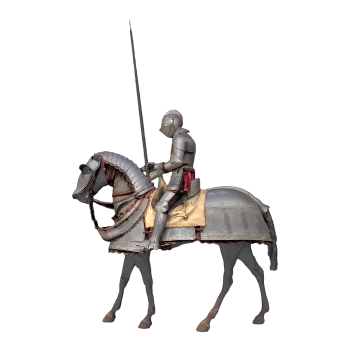
Armor for Man and Horse with the coat of arms of V ö ls Colonna
This is a steel work from northern Italy in the 16th century, created around 1575. The decoration of this work is a type popular in late 16th century northern Italy, consisting of etched decorative bands of figures, animals, portrait busts, and armor trophies. The total weight of the man and horse armor in this work is 114 pounds. This artwork has been a well-known centerpiece of the Weapons and Armor Gallery at the Cleveland Museum of Art since 1960. In addition, a part of this artwork, including a matching shield, is currently housed in the Metropolitan Museum of Art.

Marble statue of the dying Gauls in ancient Rome
The 'Dying Gauls', also known as the' Dying Galatians' or 'Dying Gladiators', is an ancient Roman marble half recumbent statue currently housed in the Capitoline Museum in Rome. This statue is a replica of a Greek sculpture, originally made of copper and dating back to the Hellenistic period (323-31 BC, 1633)

Boxes from My ś lenice's leather goods store
This artifact belongs to the Leather Goods Guild of My ś lenice, a centuries old institution whose presence in the town can be traced back to the Middle Ages. The guild box is a beautifully decorated item with symbolic elements typically associated with specific crafts. Boxes also have practical uses: storing valuable items such as celebration cups, documents, and seals. This cultural relic is currently on display at the "The Greek House" regional museum in My ś lenice.
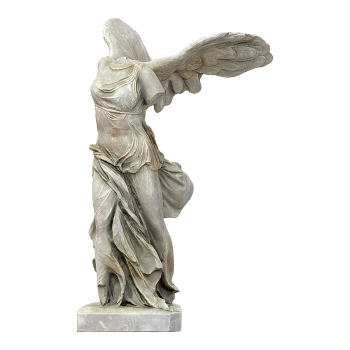
The statue of Milos, the goddess of victory, hidden in the Louvre, France.
One of the most famous statues of the goddess of victory-Nike's Winged Victory of Samothrace. The statue was found in a shrine on a mountain on the Greek island of Samothras, hence its name. It is considered to be a masterpiece of Greek sculpture from the 2nd century BC and is present in the Louvre Museum in Paris, France. The statue depicts a goddess with open wings, standing on the bow of the ship, stepping forward, her clothes flying, and the overall appearance is dynamic and dramatic.

An Egyptian eagle-headed sphinx hidden in the British Museum
This is a falcon head sphinx also known as the eagle-headed lion. It is a statue of a lion with a human face on its upper body and a falcon on its head. In ancient Egyptian religious beliefs, this image may have represented different deities or symbolism. The Sphinx usually symbolizes power and authority, while the eagle's head may be associated with the sky, the universe, or other mysterious aspects. Found in the temple of Ramses II in Abu Simbel, Egypt (Nubia), this is one of the pair. It is now in the British Museum in London.

Popular Models


Random Model
vintage movie projector
699 View



3D model of ocean liner
1086 View
Old Father Thames Old Father
969 View

Sports motorcycle Suzuki Satria
1070 View

Sony PS1 game console controller
2586 View


Catfish Specimen
541 View
